

Editor’s Note: At Chongker, we believe the best product design comes from listening to the families who use our companion pets every day. Recently, we had the honor of speaking with Scully Memories, a retired tech professional with a background in engineering and project management, about her journey using companion pets for her loved ones living with dementia and Alzheimer’s disease. Here is her story.
A Daughter’s Love: Finding Comfort in 2019
My journey with companion pets began in 2019. My father had Alzheimer’s disease and lived alone after my mother passed away. He was determined to stay in his own space rather than move into care. I’ve always loved plush animals, which sparked an idea: Could a friendly, lifelike pet bring him comfort?
I started researching options on the market. While some well-known concept pets were endlessly delayed at the time, I managed to find an interactive golden retriever puppy from a mainstream brand.
I wasn't sure if my father would take to it—you never know until you try. But to our joy, he loved it immediately. Even though his short-term memory had faded, he spoke to the pup and kept it close by his side. When he eventually moved into an assisted living facility, the dog went right along with him. After he passed away from complications, we donated the pet to another resident. The staff at his San Francisco facility loved the idea, seeing firsthand how much comfort it brought to a memory care environment.
Fast Forward to 2025: Discovering Percy
In 2025, a relative on my in-law’s side was in the early stages of Alzheimer’s and had been living in a care facility for about a year. His mobility had decreased, and he rarely wanted to participate in activities. Remembering my father's experience—and knowing this relative used to own a Samoyed—I thought a companion dog might help again.
When I searched for our previous option, the dog models were unavailable, and prices had nearly doubled. More importantly, those models relied on disposable batteries. In a care facility where residents cannot change batteries themselves and busy caregivers might miss it, a dead battery causes unnecessary stress.
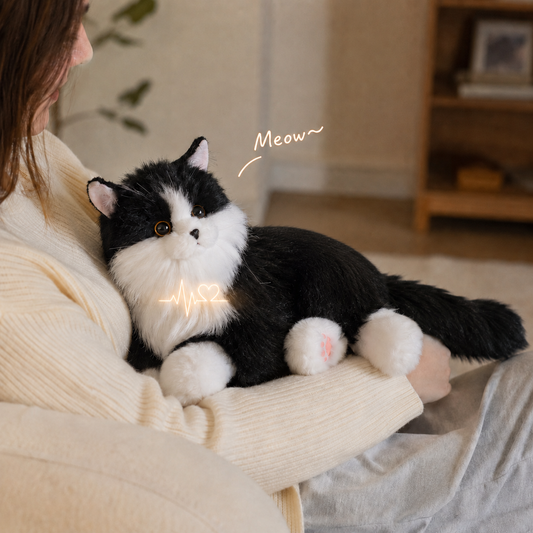
That’s when I discovered Percy. Knowing Percy was rechargeable via a simple cable gave me peace of mind. Our family decided that at around $100, it was well worth trying. Once again, the result exceeded everyone's expectations—he adored Percy.
What Truly Matters in Memory Care
When someone’s cognition is fully intact, they might view it simply as "an animatronic plush toy." But for individuals with Alzheimer’s or dementia, an earlier emotional need for attachment and connection often re-emerges. He didn't need a complex smart robot—he just needed a gentle, reassuring presence. He often says, "I love it, it’s really cool."
Based on my experience, a few simple design details make a world of difference in memory care:
-
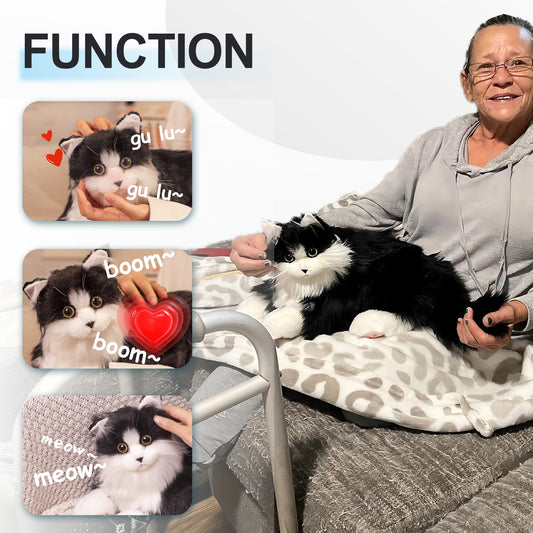
A Natural Lying Posture: Percy’s lying-down position feels natural to cuddle on a lap or set on a table next to a favorite chair while watching TV.
-
Audio & Touch Over Over-Engineering: Residents don't need complicated voice recognition or robotic tasks. What matters most are rich, varied sounds and gentle responses when petted.
-
Lingering Companion Signals: I love the idea of a pet that gradually settles into a quiet, resting state—with soft breathing or gentle sleep sounds—creating a wonderful sense of lingering presence.
-
Caregiver-Resident Interaction: Simple touches like adding seasonal scarves for Christmas or New Year offer a gentle way for caregivers and residents to share a moment together and mark the seasons.
While we keep Percy mostly in his private room to prevent it from being misplaced (a common anxiety in memory care), Percy adds genuine warmth to his routine. Instead of just watching TV all day, Percy brings a little joy back into his life.
"It might not be for everyone, but if it can bring even a slice of joy to someone living in an assisted living facility, it is worth every try." — Scully


