

Introduction: Why Interactive Companion Pets Are Gaining Attention
In recent years, interactive stuffed animals have evolved from simple toys into emotionally responsive companion tools—used in homes, assisted living facilities, and even clinical environments.
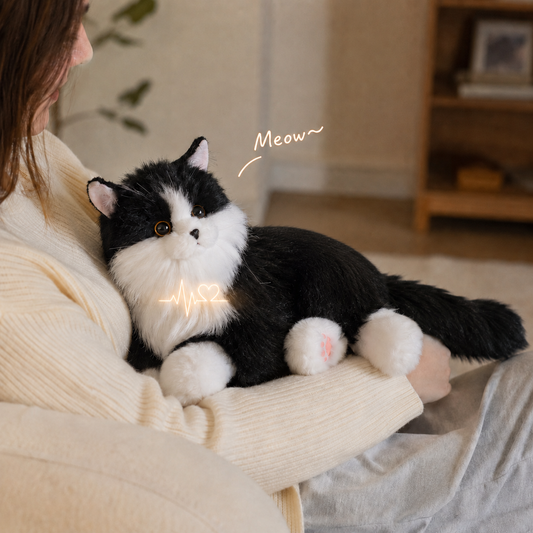
Products like Percy Robot Cat and Percy Robot Dog are designed not just to simulate pets—but to support emotional comfort, reduce loneliness, and encourage human interaction.
But do they actually work?
Let’s look at both clinical evidence and real user experiences.
1. Evidence-Based Benefits of Interactive Companion Pets
Unlike traditional plush toys, robotic companion pets are increasingly backed by research in elder care and cognitive health.
📊 Key Measurable Outcomes from Studies
Based on multiple studies (2018–2020):
-
Reduce agitation & anxiety
- Up to 65% of patients and caregivers reported calming effects
-
Decrease loneliness & depression
- Significant reduction in loneliness scores in elderly users (AARP study, n=264)
-
Improve engagement & social interaction
- Increased smiling, talking, and participation in activities
-
Enhance overall well-being
- Improvements in mood, resilience, and sense of purpose
👉 In hospital settings:
- Patients using robotic pets showed:
- Lower delirium rates
- Reduced depressive symptoms
- Better recovery outcomes
👉 In care environments:
- Staff reported:
- Reduced need for intervention
- More time available for critical care tasks
🧠 What Makes Them Effective?
Research suggests three core mechanisms:
-
Sensory realism
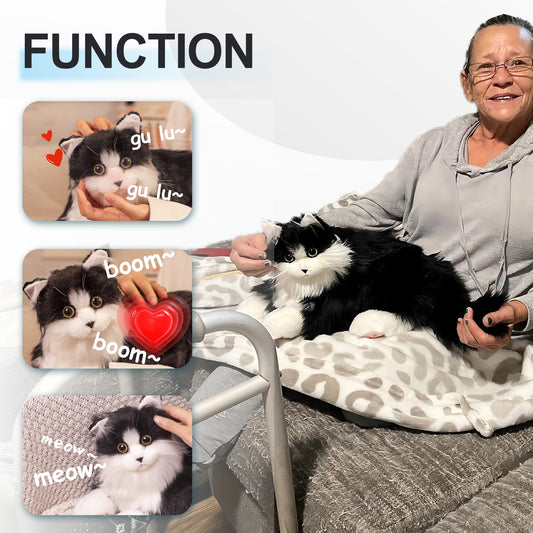
- Movement, purring, heartbeat simulation → triggers emotional response
-
Safe companionship
- No allergies, no risk, no maintenance
-
Psychological anchoring
- Users perceive them as “real enough” → leading to emotional attachment
2. Why Percy Stands Out
Compared to traditional robotic pets used in studies, Percy introduces several upgrades:
- Zero mechanical noise → more calming experience
- No exposed moving parts → safer for elderly users
- Disinfectable surface → suitable for healthcare environments
- Realistic weight & touch feedback
These features make it closer to a therapeutic tool rather than just a toy
You can explore the full range here:
👉 interactive stuffed animal collection
3. Real Stories: What It Feels Like to Own One

💬 Story 1: “She treats it like a real cat”
“I bought this for my 94-year-old client who can’t have pets…
She absolutely LOVES it.
It feels heavy on your lap, it purrs, meows, even the heart beats.
You can feel the vibrations—it’s incredible.
It’s not like a stuffed animal. It feels real.”
— Midest C
👉 What this shows:
- High sensory realism → emotional acceptance
- Works even for very elderly users
- Acts as both comfort tool and conversation starter

💬 Story 2: “It replaced something she lost”
“This is a gift for my sister in her 70s…
It’s a duplicate of her real cat she lost.
The fur feels real, the purring is spot on.
It has just enough weight to feel real.
This will bring her great joy.”
— Heater B
👉 What this shows:
- Emotional replacement for lost pets
- Strong grief-comfort function
- Gift-driven purchase motivation
4. Who Should Consider an Interactive Companion Pet?
These products are especially effective for:
👵 Elderly individuals
- Living alone
- In assisted care
- Experiencing memory decline
🧠 Dementia / Alzheimer’s patients
- Reduce agitation
- Improve emotional stability
🏥 Patients in recovery
- Reduce stress and isolation
👨👩👧 Families & caregivers
- Provide non-pharmacological emotional support
5. How This Translates to Real Value
Instead of abstract benefits, here’s what it looks like in practice:
- ✔ Fewer moments of anxiety or restlessness
- ✔ More frequent smiling and interaction
- ✔ Reduced caregiver workload
- ✔ Emotional comfort without risk
👉 In short:
It’s not replacing real pets—it’s solving situations where real pets aren’t possible.
6. Choosing the Right Companion
If you're considering one, focus on:
- Realistic touch & weight
- Responsive interaction (sound, movement)
- Safety (no small parts, quiet operation)
👉 A good starting point:
Explore lifelike interactive pet companions designed specifically for emotional comfort.


